
Get the hours right the first time
Clock in and out against real work, review the week in the office, and export payroll batches whose integrity you can actually verify.
Why this is worth solving
Handwritten timesheets arrive late, rounded generously, and impossible to reconcile against the jobs they were supposedly spent on. The argument that follows is weekly and unwinnable.
The deeper cost is that unreconciled hours make job costing meaningless. If you cannot say how long a job took, you cannot say whether it was profitable.
What it looks like
What you get
Hours attached to work, not just to a day
Technicians clock in and out against the job they are on, so the hours and the work they belong to are the same record.
Company time rules set once
Rounding increments, clock-in and clock-out grace, automatic lunch deduction, and daily and weekly overtime thresholds are configured for the company rather than negotiated per employee.
The office reviews before anything is paid
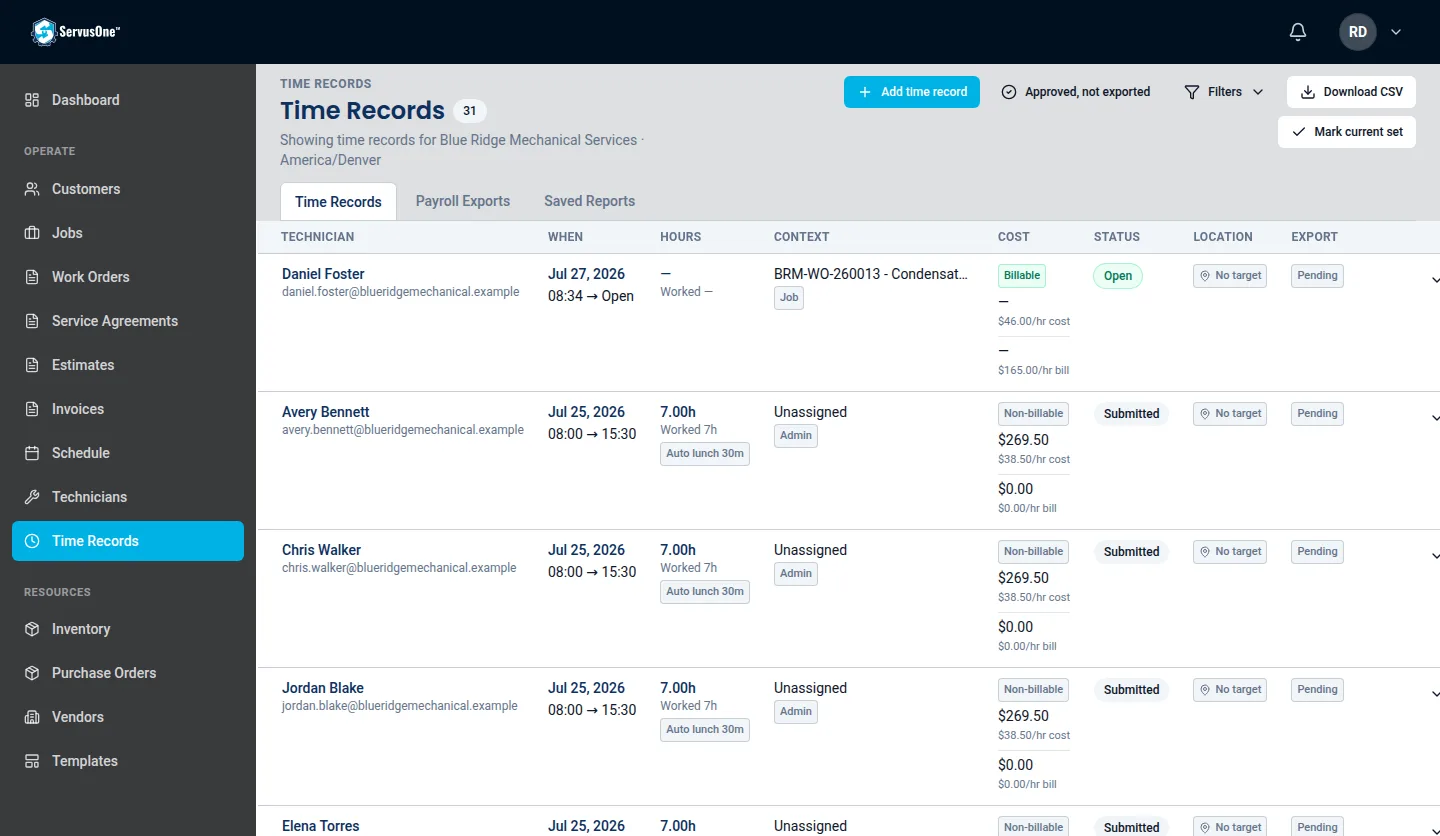
Time records land in a reviewable list where entries move through submitted and approved states, so payroll runs on hours somebody actually looked at.
Payroll exports you can verify
Approved time exports as a batch with a checksum you can re-verify, and a batch can be reversed if it went out wrong — which matters the one time a year it does.
Straight answers
Does clocking in track a technician's location?
ServusOne does not provide live GPS or continuous location tracking. Location capture at a punch is optional company configuration used for review, and geofence settings raise a warning for review rather than blocking a technician from clocking in or out.
Is ServusOne a payroll system?
No. ServusOne captures, reviews, and exports time records. Paying people remains the job of your payroll provider.
Put it against a real week of work
The 14-day trial starts without a card, and the plans are published in full if you would rather look at those first.