
Quote it once, and know exactly where the quote stands
Line-itemed estimates that move through a real lifecycle — draft, sent, accepted or declined, converted — so nothing sits in limbo because nobody chased it.
Why this is worth solving
The estimate that never got a decision is the most expensive document in a service business. It consumed a site visit and an hour of writing, and then it went quiet, and nobody can say whether the customer said no or simply never replied.
Rebuilding a quote from scratch because the original lived in someone's documents folder is the second most expensive.
What it looks like
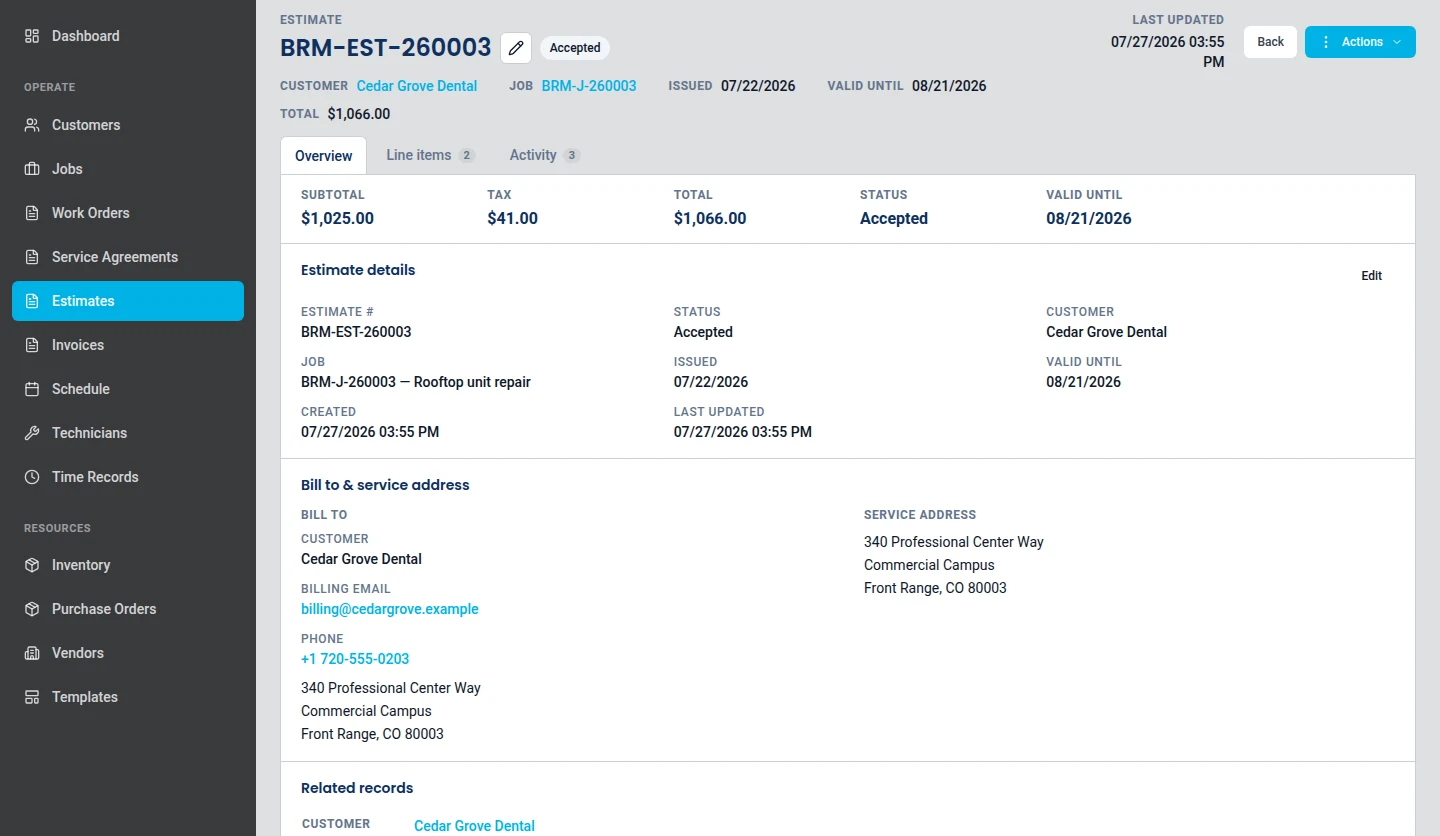
What you get
Line items, not a lump sum
Estimates are built from line items with quantities and pricing, so a customer questioning the total can see what makes it up, and you can adjust one line instead of rewriting the document.
A status that means something
Estimates carry an explicit state — draft, sent, accepted, declined, converted. “Still out there” is a filter, not a guess.
Accepted work becomes real work
An accepted estimate converts into the job that gets scheduled, so the thing you quoted and the thing you do are demonstrably the same scope.
Customers can review it themselves
Estimates are visible to the customer through the client portal, which removes the “can you resend that?” round trip.
Straight answers
Can a customer accept an estimate online?
Customers can view their estimates through the ServusOne client portal. Acceptance is recorded against the estimate so its status reflects the customer's decision.
Put it against a real week of work
The 14-day trial starts without a card, and the plans are published in full if you would rather look at those first.