
Know what the job cost you, not what you hoped it cost
Parts recorded against the work order that consumed them, purchase orders raised and received against stock, and a materials picture that survives month end.
Why this is worth solving
Most service businesses know their labour cost roughly and their material cost not at all. Parts leave the van, get fitted, and are reconstructed from a supplier statement six weeks later.
By then the invoice has gone out — usually without the fitting that nobody recorded.
What it looks like
What you get
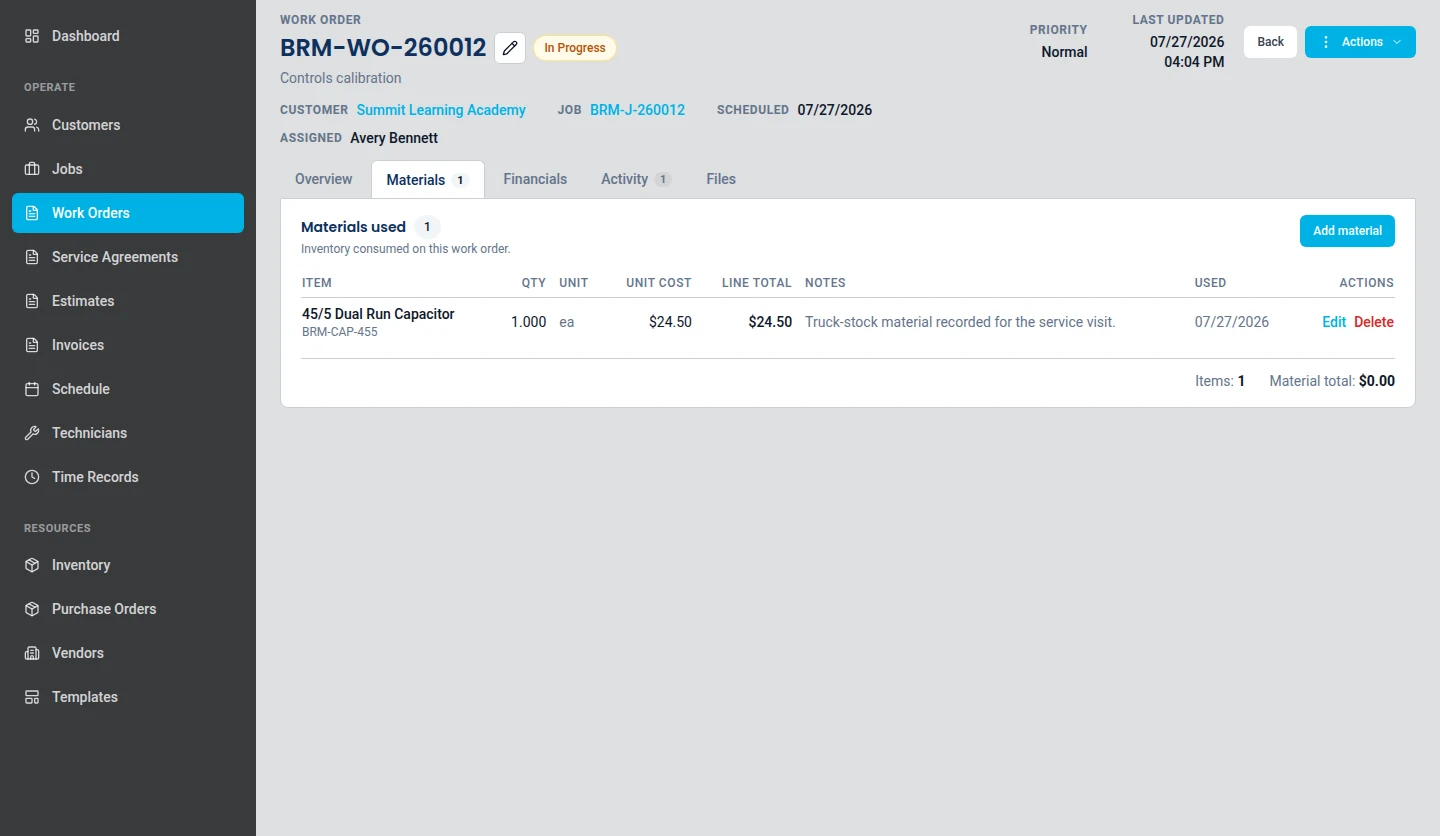
Materials recorded on the work order
Parts consumed are recorded against the specific work order, with quantities, so the job carries its own material cost rather than inheriting an average.
Purchase orders that close the loop
Purchase orders are raised with line items and received against, so incoming stock updates inventory instead of arriving as a mystery box on a shelf.
Stock you can actually look up
Inventory items are first-class records, so “do we have one” is a lookup rather than a phone call to whoever loaded the van.
Billing follows what was used
Because materials sit on the work order, the invoice raised from that work reflects the parts the job genuinely consumed.
Straight answers
Is this full manufacturing or warehouse management?
No. ServusOne's inventory is scoped to service work — stock items, purchase orders, and the materials consumed on a job. It is not a manufacturing, bin-location, or multi-warehouse logistics system.
Put it against a real week of work
The 14-day trial starts without a card, and the plans are published in full if you would rather look at those first.