
Answer the weekly questions without rebuilding a spreadsheet
Work volume, revenue, outstanding receivables, and technician hours, drawn from the jobs and invoices your team is already recording.
Why this is worth solving
Most service businesses have the data and none of the reporting. The numbers exist across job records, invoices, and timesheets, and getting them into one view is a monthly evening someone loses.
By the time the spreadsheet is finished, the month it describes is over and nothing can be done about it.
What it looks like
What you get
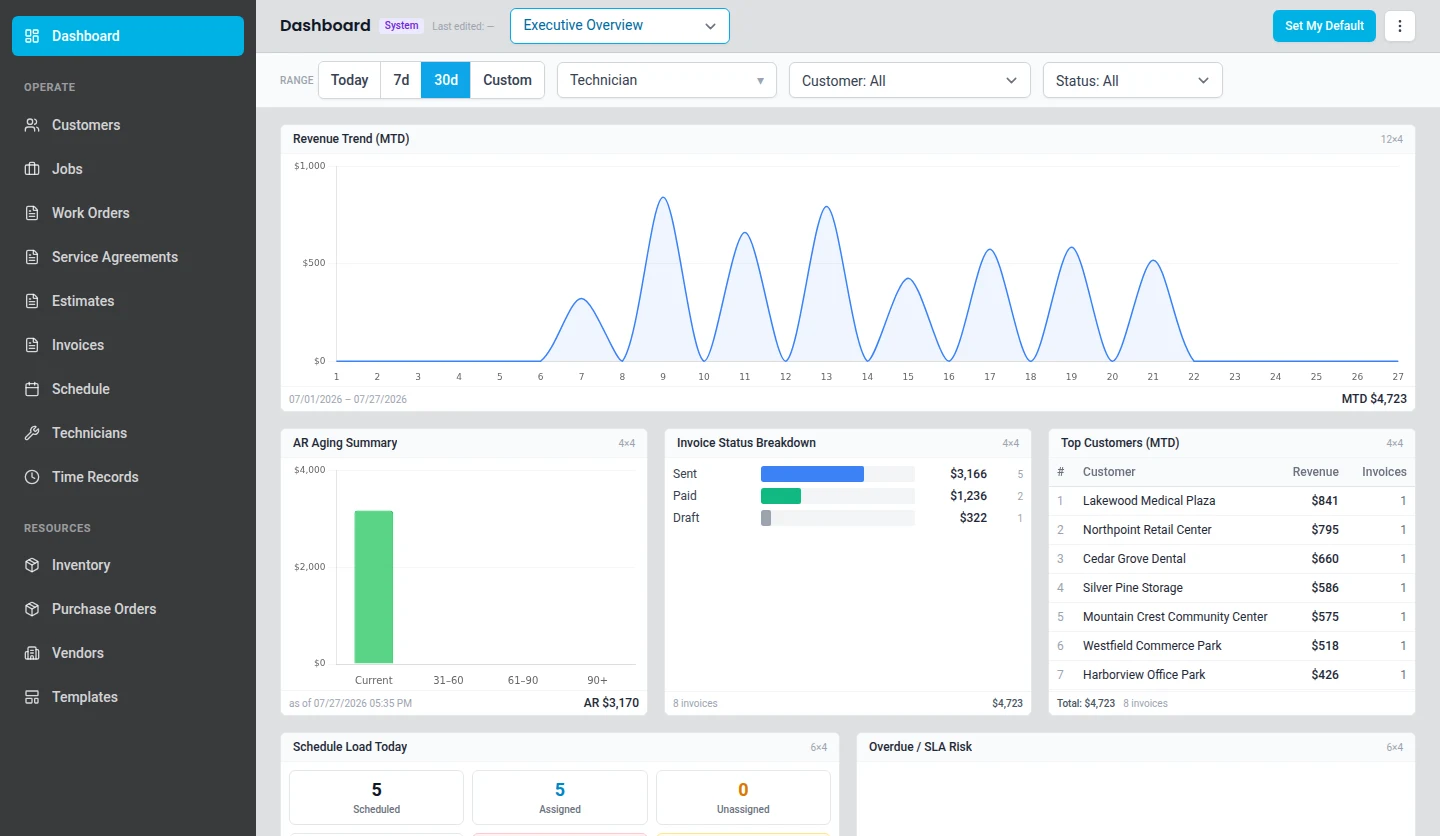
An operational dashboard, not a vanity screen
Work orders, receivables, revenue, customers, and the coming schedule sit together, because those are the things that determine whether next week works.
Saved reports you return to
Reports you rely on can be saved and reopened, so the weekly review is a click rather than a rebuild.
Time and payroll reporting included
Technician hours report alongside operational and financial figures, and time-record reports can be scheduled for preview rather than assembled manually.
Built from records, not from estimates
Reporting reads the same jobs, invoices, and time entries your team creates day to day. There is no separate data-entry ritual to keep it accurate.
Straight answers
Can I export report data?
Yes. Report and time-record data can be exported for use outside ServusOne, including payroll export batches.
Does reporting include forecasting or predictions?
No. ServusOne reports on the work and money your records already describe. It does not forecast demand or predict revenue.
Put it against a real week of work
The 14-day trial starts without a card, and the plans are published in full if you would rather look at those first.